
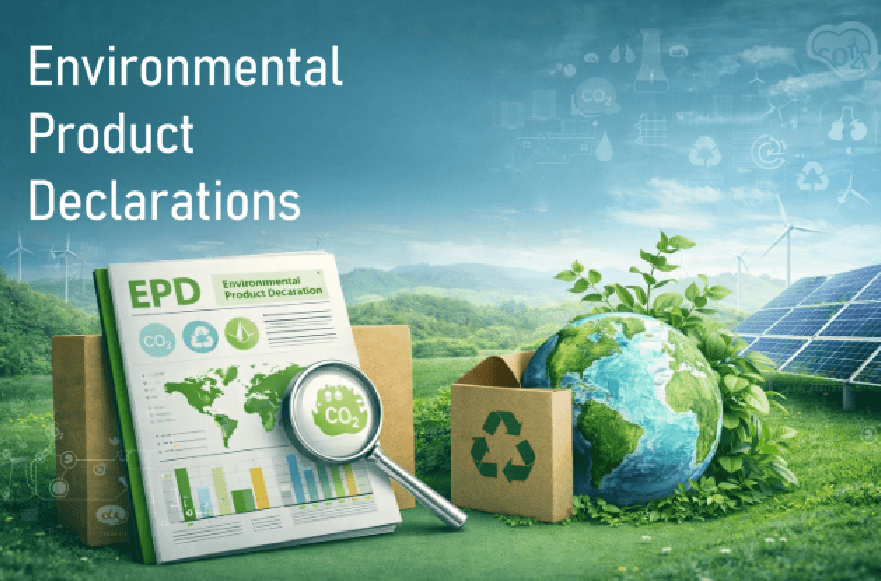
Environmental Product Declarations (EPDs) are becoming essential for manufacturers looking to demonstrate environmental transparency and meet growing demand for verified sustainability data.
If you’re considering producing an EPD, the process may seem technical but it’s far more manageable when broken into clear steps. Read on for our straightforward guide to what’s involved.
What Is an Environmental Product Declaration?
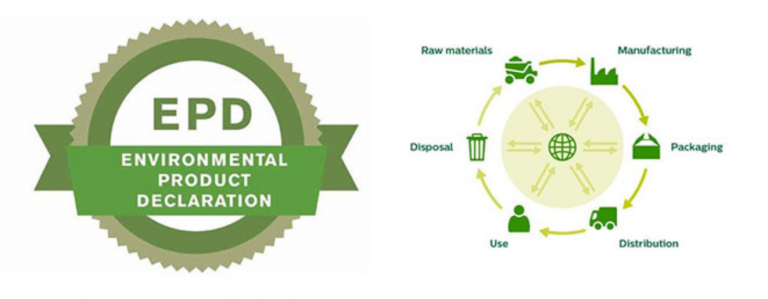
An Environmental Product Declaration (EPD) is a standardised, independently verified document that reports the environmental impacts of a product based on a Life Cycle Assessment (LCA). EPDs typically follow recognised standards such as EN 15804, ISO 21930 or ISO 14025. They provide transparent data for specifiers, contractors, procurement teams and sustainability professionals.
Step 1. Choose Your EPD Programme
Before starting your LCA, decide which EPD Programme you intend to publish with. Each programme has its own templates, rules and fee structures. When selecting a programme, it is important to consider alignment with your target markets, compliance with recognised standards (eg EN 15804 or ISO 21930) and the full five-year cost structure.
Choosing early helps ensure the assessment is carried out correctly from the start.
Step 2. Undertake a Life Cycle Assessment (LCA)
An EPD is built on a robust Life Cycle Assessment. In order to undertake this, you’ll need either an experienced in-house LCA specialist or an external consultant with relevant expertise.
The LCA process will confirm applicable standards; identify the correct Product Category Rule (PCR); collect manufacturing and product data; and model environmental impacts across relevant life cycle stages.
This step is vital as getting this right ensures your EPD is accurate, credible and compliant.
Step 3. Draft the EPD
Once the LCA is complete, the results are structured into the required EPD format.
The document must clearly present:
- The declared unit
- System boundaries
- Environmental impact indicators
- Assumptions and methodology
Transparency and consistency are key.
Step 4. Independent Verification
All Environmental Product Declarations must be independently verified. An approved verifier will review:
- Alignment with ISO standards and PCR rules
- Data quality and completeness
- Methodology and assumptions
- Consistency across the document
This step ensures the declaration is robust and trustworthy.
It is recommended to engage in this verification process at the very start of the LCA project – to ensure timely delivery of the publishable EPD document.
Step 5. Submit and Publish
After verification, the final documents are submitted to the chosen EPD Programme. Once publishing fees are settled and checks are completed, the EPD is published in the programme’s public database and assigned a unique registration number.
Most EPDs are valid for five years, unless significant product changes require an update.
Do You Need Advice on Environmental Product Declarations?
Producing an EPD doesn’t have to be overwhelming. Environmental Strategies Ltd provides independent advice to help organisations understand EPD requirements; the difference between these and product carbon footprints; interpret standards; review life cycle assessment (LCA) outputs and make informed decisions throughout the process.
While we do not produce or verify EPDs directly, we can support you in selecting the right approach, refer you to our preferred partners and help you appoint appropriately qualified practitioners.
If you’d like strategic guidance on your EPD pathway, interpretation of standards or support in planning your LCA, get in touch with our team to discuss your options.